
Trace and Color Worksheets for Kids
Learn how trace and color worksheets help kids practice pencil control, drawing confidence, and coloring, plus how to create printable light-gray tracing pages by subject.
- Trace and Color
- Tracing Worksheets
- Drawing Practice
- Printable
- For Kids
Published by KidColorAI · Updated
%22%20%2F%3E%0A%09%09%09%09%09%3Cstop%20offset%3D%2255%25%22%20stop-color%3D%22hsl(221%2082%25%2064%25)%22%20%2F%3E%0A%09%09%09%09%09%3Cstop%20offset%3D%22100%25%22%20stop-color%3D%22hsl(5%2080%25%2062%25)%22%20%2F%3E%0A%09%09%09%09%3C%2FlinearGradient%3E%0A%09%09%09%09%3Cfilter%20id%3D%22shadow%22%20x%3D%22-20%25%22%20y%3D%22-20%25%22%20width%3D%22140%25%22%20height%3D%22140%25%22%3E%0A%09%09%09%09%09%3CfeDropShadow%20dx%3D%220%22%20dy%3D%2216%22%20stdDeviation%3D%2224%22%20flood-color%3D%22rgba(17%2C24%2C39%2C0.18)%22%20%2F%3E%0A%09%09%09%09%3C%2Ffilter%3E%0A%09%09%09%3C%2Fdefs%3E%0A%09%09%09%3Crect%20width%3D%221200%22%20height%3D%22800%22%20rx%3D%2256%22%20fill%3D%22url(%23bg)%22%20%2F%3E%0A%09%09%09%3Ccircle%20cx%3D%22140%22%20cy%3D%22140%22%20r%3D%2284%22%20fill%3D%22white%22%20opacity%3D%220.18%22%20%2F%3E%0A%09%09%09%3Ccircle%20cx%3D%221020%22%20cy%3D%22126%22%20r%3D%22120%22%20fill%3D%22white%22%20opacity%3D%220.12%22%20%2F%3E%0A%09%09%09%3Ccircle%20cx%3D%221050%22%20cy%3D%22680%22%20r%3D%22190%22%20fill%3D%22white%22%20opacity%3D%220.1%22%20%2F%3E%0A%09%09%09%3Cpath%20d%3D%22M0%20620C146%20570%20254%20584%20368%20624C500%20670%20598%20704%20728%20680C872%20654%20962%20560%201200%20604V800H0Z%22%20fill%3D%22rgba(255%2C255%2C255%2C0.16)%22%20%2F%3E%0A%09%09%09%3Cpath%20d%3D%22M0%20690C180%20650%20268%20676%20420%20720C538%20754%20638%20764%20760%20744C892%20720%201008%20650%201200%20690V800H0Z%22%20fill%3D%22rgba(255%2C255%2C255%2C0.1)%22%20%2F%3E%0A%09%09%09%3Cg%20filter%3D%22url(%23shadow)%22%3E%0A%09%09%09%09%3Cg%20transform%3D%22translate(310%20150)%22%3E%0A%09%09%09%09%09%3Crect%20x%3D%220%22%20y%3D%220%22%20width%3D%22470%22%20height%3D%22330%22%20rx%3D%2238%22%20fill%3D%22rgba(255%2C%20255%2C%20255%2C%200.92)%22%20opacity%3D%220.96%22%2F%3E%0A%09%09%09%09%09%3Crect%20x%3D%2270%22%20y%3D%2254%22%20width%3D%22220%22%20height%3D%22220%22%20rx%3D%2224%22%20fill%3D%22hsla(203%2084%25%2052%25%20%2F%200.18)%22%20%2F%3E%0A%09%09%09%09%09%3Crect%20x%3D%22112%22%20y%3D%2288%22%20width%3D%22136%22%20height%3D%22150%22%20rx%3D%2218%22%20fill%3D%22hsl(221%2082%25%2064%25)%22%20opacity%3D%220.85%22%2F%3E%0A%09%09%09%09%09%3Cpath%20d%3D%22M126%20210l28-48%2034%2026%2028-36%2040%2058z%22%20fill%3D%22rgba(255%2C%20255%2C%20255%2C%200.92)%22%20opacity%3D%220.92%22%2F%3E%0A%09%09%09%09%09%3Crect%20x%3D%22308%22%20y%3D%2282%22%20width%3D%2268%22%20height%3D%22140%22%20rx%3D%2224%22%20fill%3D%22hsl(5%2080%25%2062%25)%22%20opacity%3D%220.9%22%2F%3E%0A%09%09%09%09%09%3Cpath%20d%3D%22M326%2096l32%20104%22%20stroke%3D%22hsl(203%2084%25%2052%25)%22%20stroke-width%3D%2214%22%20stroke-linecap%3D%22round%22%2F%3E%0A%09%09%09%09%09%3Cpath%20d%3D%22M342%2088l18%2052%22%20stroke%3D%22rgba(255%2C%20255%2C%20255%2C%200.92)%22%20stroke-width%3D%2210%22%20stroke-linecap%3D%22round%22%20opacity%3D%220.88%22%2F%3E%0A%09%09%09%09%09%3Cpath%20d%3D%22M100%20280h220%22%20stroke%3D%22hsl(203%2084%25%2052%25)%22%20stroke-width%3D%2212%22%20stroke-linecap%3D%22round%22%20opacity%3D%220.8%22%2F%3E%0A%09%09%09%09%09%3Ccircle%20cx%3D%22370%22%20cy%3D%22254%22%20r%3D%2216%22%20fill%3D%22hsl(221%2082%25%2064%25)%22%20opacity%3D%220.7%22%2F%3E%0A%09%09%09%09%09%3Ccircle%20cx%3D%22394%22%20cy%3D%22272%22%20r%3D%228%22%20fill%3D%22hsl(203%2084%25%2052%25)%22%20opacity%3D%220.9%22%2F%3E%0A%09%09%09%09%3C%2Fg%3E%0A%09%09%09%3C%2Fg%3E%0A%09%09%09%3Cg%20opacity%3D%220.96%22%3E%0A%09%09%09%09%3Crect%20x%3D%2272%22%20y%3D%2272%22%20width%3D%22238%22%20height%3D%2254%22%20rx%3D%2227%22%20fill%3D%22rgba(255%2C255%2C255%2C0.22)%22%20%2F%3E%0A%09%09%09%09%3Ctext%20x%3D%2298%22%20y%3D%22107%22%20font-family%3D%22Inter%2C%20Arial%2C%20sans-serif%22%20font-size%3D%2224%22%20font-weight%3D%22700%22%20fill%3D%22rgba(255%2C255%2C255%2C0.95)%22%3EKidColorAI%20Guide%3C%2Ftext%3E%0A%09%09%09%3C%2Fg%3E%0A%09%09%3C%2Fsvg%3E)
What Are Trace and Color Worksheets?
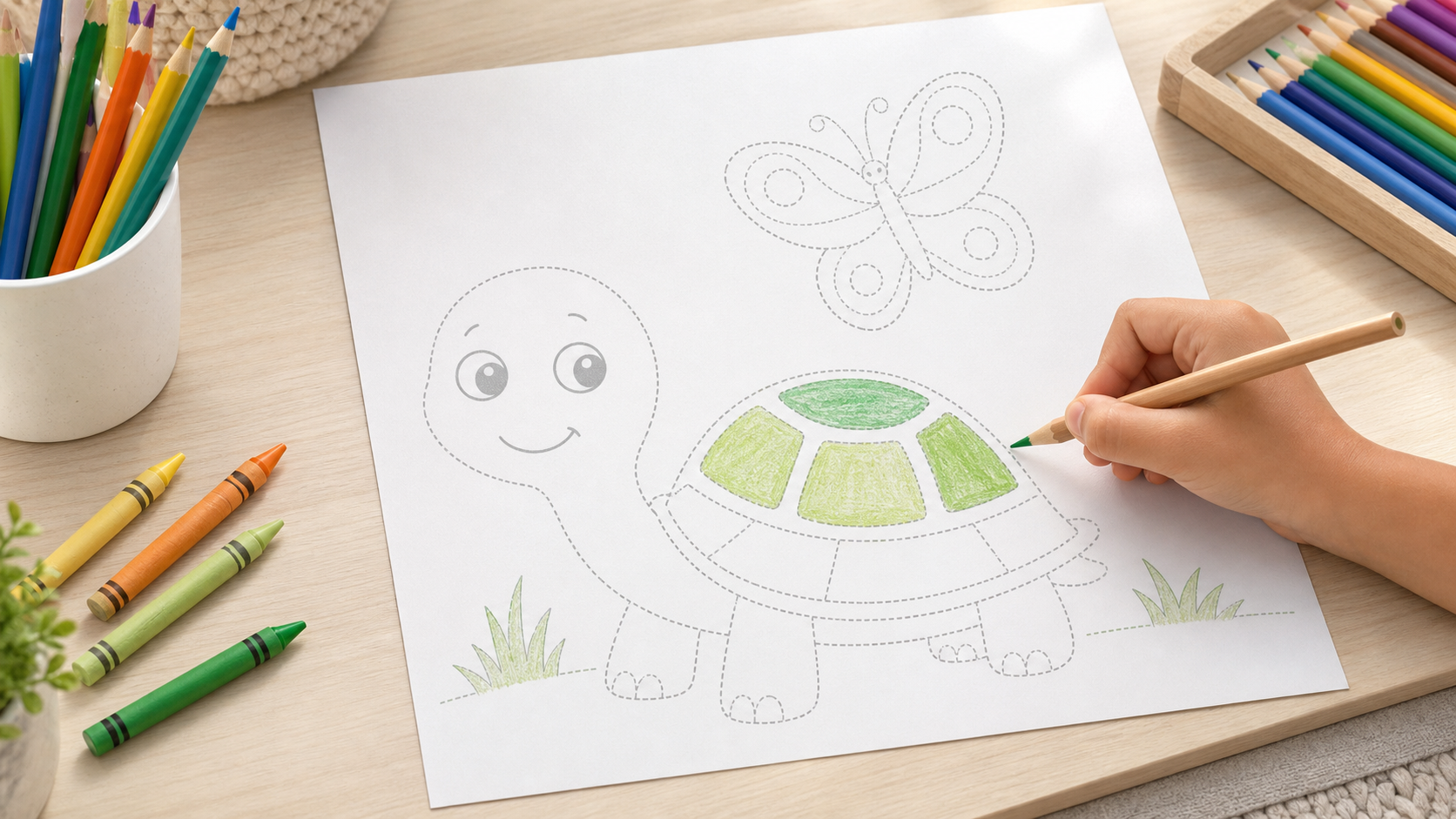
Trace and color worksheets are printable activity pages with light-gray outlines that children trace first and color afterward. The tracing lines give kids a clear path to follow, while the coloring step turns the practice page into a finished picture they can enjoy.
They are different from standard coloring pages because the first goal is drawing practice. A normal coloring page usually has dark finished outlines. A trace and color page uses softer guide lines, dotted lines, dashed lines, or pale outlines so children can build the picture with their own pencil before adding color.
Why Trace and Color Helps Early Drawing Practice
Tracing activities give children a structured way to practice hand-eye coordination, pencil control, line direction, shape recognition, and confidence with drawing. The page is not blank, so reluctant drawers have a starting point, but they still get to move their hand through the full outline of an animal, vehicle, object, or character.
Trace and color worksheets work best as low-pressure practice. The goal is not perfect handwriting or a formal motor-skills assessment. Parents and teachers should treat each page as a creative warm-up, a quiet activity, or a short art lesson that ends with coloring.
Best Subjects and Themes
Simple, recognizable subjects make the strongest tracing worksheets. Animals, dinosaurs, cats, turtles, butterflies, cars, unicorns, flowers, rockets, school items, and holiday objects all work well because children can understand the picture before they trace it.
For preschool and kindergarten, choose large shapes, rounded outlines, and fewer small details. For older children, add patterns, background elements, or a slightly more detailed scene. A good worksheet should still leave plenty of open space for tracing and coloring without making the page feel crowded.
How to Use Trace and Color at Home or in Class
Print one worksheet, point out the light tracing lines, and demonstrate tracing a short curve before asking the child to continue. Many kids do best with a regular pencil first, then crayons or colored pencils after the outline is complete.
In classrooms, trace and color pages work well for morning work, art centers, fine-motor stations, early finisher folders, seasonal activities, and small-group drawing practice. At home, they are useful for quiet time, screen-free activities, homeschool art, and themed practice around a child's favorite subject.
How to Create Custom Trace and Color Worksheets with KidColorAI
KidColorAI's Trace and Color tool lets you create a printable tracing worksheet from a subject such as "friendly turtle," "dinosaur," "butterfly," "race car," or "unicorn." You can choose the category, age range, difficulty, line style, gray intensity, and whether the page includes a title or name line.
The generated worksheet is designed for black-and-white printing, with pale guide lines that children can trace before coloring. Because the image is generated from your prompt, you can make worksheet themes for a lesson, birthday, holiday, favorite animal, or classroom unit without searching for a fixed worksheet pack.
Printing and Quality Checklist
Before printing a full batch, print one test page and check the line visibility. The tracing lines should be light enough for a child to draw over, but dark enough to see on regular printer paper. If the page looks too faint, increase the gray intensity or use a darker line style.
Use portrait orientation for most trace and color worksheets, keep the subject centered, and avoid tiny details near the edge of the page. Review the title, name line, and any text before sharing the worksheet with a class. For markers, thicker paper helps prevent bleed-through.
Limitations and Adult Review
AI-generated tracing worksheets can vary from one result to the next. Always review the worksheet before printing for children, especially if the prompt asks for a specific object, animal, or classroom topic. Check that the outline is age-appropriate, the tracing path is clear, and the page does not contain confusing extra details.
Trace and color worksheets are educational art activities, not medical, therapeutic, or handwriting evaluations. If a child needs specialized fine-motor support, use advice from a qualified professional and treat printable tracing pages as optional practice material.